


Wedding MC Services: What an MC Actually Does (and Why It Matters)
Most couples think they know what a wedding MC does. They picture someone at a microphone saying "please welcome to the dance floor, for the very first time..." and then stepping aside. That's a small slice of the actual role — and understanding what a great wedding MC really does is one of the most underrated decisions in the entire planning process.

In 2026, as couples research vendors more thoroughly than ever before, the MC question keeps surfacing in ways it didn't a few years ago. According to The Knot's wedding planning data, entertainment is consistently ranked among the top factors guests remember from a wedding — and the MC is the human face of that entertainment all evening long. The MC is the only person at your wedding who speaks to every guest, manages every transition, and holds the entire arc of the evening together. Get it right and nobody notices — the night just flows. Get it wrong and everyone remembers.
Table of Contents
What a Wedding MC Actually Does (Not What You Think)
Here's the thing most couples don't realize until they're mid-planning: the wedding MC isn't just an announcer. They're the connective tissue of your entire reception. Every transition — cocktail hour to dinner, dinner to first dance, first dance to cake cutting, cake cutting to open dancing — flows through the MC. Every guest experience is shaped by how those moments are introduced, framed, and landed.
After 6,000+ weddings, we've seen what happens when an MC treats the role as "read names off a list and stay out of the way." Guests drift. Transitions feel awkward. The energy that should build through the evening plateaus. And the couple, in the middle of their own wedding, can sense that something is slightly off without being able to name it.
A great wedding MC does several things simultaneously: they manage logistics (keeping the timeline moving without couples or guests feeling rushed), they set the emotional register for each moment (a toast introduction sounds different from a first dance introduction), they read the room in real time (knowing when to be brief, when to be warm, and exactly when to get out of the way), and they serve as the face of the event for every guest from table one to the back row.
The MC is also the primary emergency management system for your wedding. Timeline running long? The MC absorbs it gracefully. Vendor running late? The MC fills the space. Drunk uncle approaching the microphone uninvited? The MC intercepts. We handle all of that so neither you nor your wedding planner needs to manage it from the dance floor. Here's how our DJ and MC services work together.
Ready to talk through MC services for your wedding? Let's connect.
The Difference Between a DJ and an MC
These two roles overlap significantly in a DJ/MC combo — and that's intentional — but understanding them separately clarifies what you're actually hiring for.
The DJ controls the music: selection, mixing, energy arc, volume management, reading the dance floor, and responding to the room in real time. A great DJ is managing several things simultaneously — what's playing now, what's coming next, how the crowd is responding, and where the energy needs to go in the next 20 minutes. It's an active, responsive job that requires full attention.
The MC controls the words: all announcements, introductions, transitions, and crowd engagement. The MC is the voice of the evening. They shape how guests experience each moment through framing, tone, pacing, and presence at the microphone.
These are genuinely different skill sets. A DJ who's excellent at reading a dance floor may not be a natural at warm, well-paced introductions. An MC who's brilliant at crowd engagement may not have the technical skills to manage a full DJ rig. The best DJ/MC performers are those who've developed genuine fluency in both — and the gap between a DJ who "also does MC" as an afterthought and a true DJ/MC is audible within the first 20 minutes of a reception. Our full wedding DJ services include MC capability as an integrated part of how we work, not a bolt-on feature.
Standalone MC vs. DJ/MC Combo: Which Do You Need?
This is one of the most common questions couples ask when they start planning their wedding entertainment. Here's the honest breakdown:
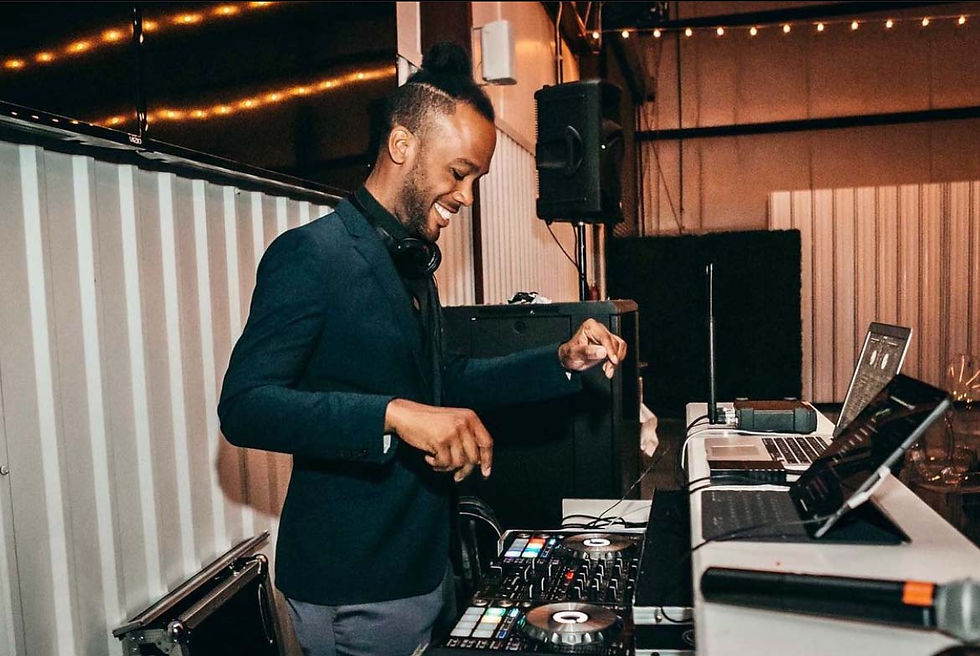
A standalone MC makes sense in a limited number of scenarios: you've already booked a live band that doesn't provide MC services, you have a specific person (a family friend, a comedian, a local personality) whose presence at the mic is important to you, or you're doing a very formal event where the MC role needs to be distinctly separate from the music function. In these cases, a standalone MC coordinating with a DJ or band can work well — as long as the two have worked together before and have a clear communication protocol for the evening.
A DJ/MC combo works better for the vast majority of weddings. Here's why: when the same person controls both the music and the microphone, the transitions are inherently tighter. The intro music for the wedding party walks directly into the announcement. The first dance begins the second the introduction ends. There's no hand-signal between two separate vendors, no delay while one person cues the other. It's one person with full control of the room's audio environment — and it shows.
The DJ/MC combo also simplifies planning significantly. One point of contact, one brief, one run-of-show document, one person who knows your full timeline and can adapt it in real time without needing to loop in a second vendor. We've worked alongside standalone MCs at events where the client had a specific reason to separate the roles, and we've seen both configurations succeed and struggle. The deciding factor is almost always how well the two vendors have worked together before. Our wedding packages guide goes deeper on how to structure your entertainment for the full evening.
What Makes a Great Wedding MC
The qualities that make an MC great at corporate events are different from the qualities that make one great at weddings. Here's what actually matters at a reception:
Warm, not performative. The worst wedding MCs treat the reception like a late-night talk show — big energy, lots of jokes, constant presence at the mic. The best ones understand that their job is to serve the couple's moment, not create their own. Warmth reads differently than entertainment. Guests should feel welcomed and included, not performed at.
Timing over content. The most important MC skill at a wedding isn't what they say — it's when they say it and how long they say it for. A first dance introduction that runs 90 seconds is a problem. A toast bridge that creates a natural transition from the last speech to the next course is invisible in the best way. The MC should feel like a natural part of the evening, not an interruption to it.
Genuine crowd reading. The room at 6:30pm during cocktail hour is not the same room at 9:30pm on the dance floor. A skilled MC reads that shift and adjusts — energy level, vocabulary, pacing, amount of talking — in real time. This is something you can't script; it's a live skill that only comes from doing it hundreds of times.
Name and pronunciation fluency. This sounds basic. It's not. The MC at your wedding will announce names from multiple families, possibly in multiple languages, potentially including hyphenated surnames and cultural naming conventions that aren't immediately obvious. We coordinate every pronunciation with couples during planning so that when the moment comes, it's exactly right. See what our clients say about working with us.
Emergency management. The ability to fill space gracefully when something runs long, to redirect an uninvited speaker diplomatically, and to keep the evening moving when a vendor or family member throws a wrench in the timeline — these are the MC skills that never show up in demos but matter more than almost anything else.
What a Mediocre MC Looks Like (And How to Avoid It)
Since we're being direct: here's what to watch out for.
The Dad-Joke MC. Every introduction comes with a pun. The toast transitions involve a callback to the couple's "cute meeting story" that they've told nine times. The energy is enthusiastic but the execution lands flat. Guests smile politely and reach for their drinks.
The Disappearing MC. Announcements are made at the appropriate times, but the MC is otherwise invisible and uninvested. Transitions feel administrative. The room never quite gets warm because nobody's tending to it.
The Overstaying MC. The opposite problem — this MC treats every transition as an opportunity for content. Introductions run long. Guests are waiting for the first dance while the MC finishes a story. The evening's energy keeps getting interrupted rather than built.
The Unprepared MC. Names are mispronounced. The run-of-show has surprises they weren't briefed on. Transitions feel slightly off because the MC is navigating in real time instead of executing a well-rehearsed plan.
The common thread in all of these is a disconnect between what the MC thinks their job is and what the couple actually needs. We brief thoroughly, rehearse the full run-of-show before the event, and treat every MC performance as something that requires real preparation — because it does.
We handle the preparation so your evening runs exactly as planned. Get in touch.
How the MC Role Ties the Entire Day Together
Let's walk through an actual wedding evening and look at every point where the MC is actively shaping the experience.
Guest arrival and cocktail hour: The MC may not be actively on the mic, but the atmosphere they've helped create — music selection, volume, energy calibration — is already setting the tone. When cocktail hour transitions to the reception, the MC's introduction is the first impression guests have of what the evening will feel like.
Grand entrance: The wedding party walk-in is the MC's first major performance moment. The energy they bring into that room — how they build anticipation, how they land the couple's introduction — sets the emotional temperature for the entire reception. We've seen a great entrance introduction bring a room to its feet before the couple even walks in.
Dinner: The MC manages the transition from dancing energy to seated dinner without losing the room's engagement. Toasts are introduced and bookended by the MC. Course transitions are signaled. The timeline is managed silently, keeping everything on track without guests feeling directed. Our reception timeline guide covers how to structure these moments for maximum impact.
Milestone moments: First dance, parent dances, cake cutting — each one is introduced by the MC with the right tone for that specific moment. A parent dance introduction sounds different from a cake cutting announcement. Getting those tonal shifts right is what separates a great MC from a functional one.
Open dancing: Once the dance floor opens, the MC steps back and the DJ moves to the foreground. But the MC is still active — checking in on timeline, managing any additional events (bouquet toss, anniversary dance, special requests), and maintaining energy through the night.
Last dance and send-off: The closing moments of a wedding are often underserved by MCs who treat them as administrative. A well-executed last dance introduction and send-off sequence can close a wedding on an emotional high that guests carry home. We plan the ending with the same care as the beginning.
The Ceremony-to-Reception Arc: What an MC Manages
At events where Second Song handles both ceremony and reception, the MC role extends earlier into the day. Ceremony coordination — seating music management, processional cuing, recessional timing — flows directly into the cocktail hour atmosphere and then the full reception arc.
This continuity matters more than couples expect. When the same person who managed the ceremony audio is also managing the reception, they carry context the entire evening. They know how the crowd felt during the ceremony. They know which moments landed emotionally. They can calibrate the reception energy to pick up where the ceremony left off rather than starting from scratch. Our DJ and live music coordination integrates MC services across the full day — ceremony through last dance — as one cohesive experience.
Working With Your MC: How the Planning Process Should Feel
The planning process with your MC should be as thorough as the planning process with your photographer or florist. Here's what that looks like when done well.
Weeks before the event, we collect the full run-of-show: every name and pronunciation, every moment in sequence, any family dynamics to be aware of (a common one: divorced parents who shouldn't be introduced together), any surprises the couple is planning that the MC needs to be in on, and the couple's specific preferences for tone and energy.
We also collect what couples don't want. Some couples hate the dollar dance. Some have a family member who will absolutely try to make an unplanned toast if not actively redirected. Some have a first dance song that requires a specific build for the introduction. These are the things that make or break the MC performance — and they only surface through thorough pre-event coordination.
The run-of-show becomes the MC's playbook. It's not a script they read from — a scripted MC sounds scripted — but a framework they know well enough to execute naturally, adapt to in real time, and return to when the evening needs a course correction.

Why the DJ/MC Combo Is the Most Seamless Option
We've made this case throughout — here's the direct version.
When the DJ and MC are the same person, or a tightly coordinated two-person team where both are under the same entertainment umbrella, the evening has a single nervous system. Music and announcements respond to each other in real time. The intro builds to exactly the right level for the announcement. The first dance music starts at exactly the moment the introduction ends, not two seconds later while the MC signals the DJ across the room. The timeline is managed by one entity who can adjust music and pacing simultaneously, not two vendors trying to sync via eye contact.
The alternative — a separate DJ and MC who haven't worked together before — introduces coordination latency at every single transition. It's not always a problem, but it's always a risk. And at a wedding, where every transition happens exactly once, risk management matters. WeddingWire's vendor research consistently shows that couples in 2026 are prioritizing seamless coordination and single-vendor entertainment solutions over piecemeal approaches — and the DJ/MC combo is the clearest expression of that trend.
Our DJ/MC approach means that everything that comes through speakers at your wedding — music, voice, sound effects, ceremony audio — is coordinated by the same team with the same brief, the same timeline, and the same shared understanding of what the evening is supposed to feel like. See our event lighting and production approach — it's the same philosophy applied across every element we touch.
We handle all of it. Let's build your evening together.
Red Flags When Hiring a Wedding MC
A few things that should prompt a closer look when you're interviewing MC candidates. Brides magazine's entertainment planning guide covers general vetting criteria — here's what we'd add specifically for the MC role:
They can't give you a sample introduction on the spot. Any experienced wedding MC should be able to demonstrate how they'd introduce a wedding party or a first dance in a brief conversation. If they can't, they probably haven't done it enough to be fluent.
They don't ask about your family dynamics. A thorough MC asks about divorced parents, family members to be careful with, and anything that could create an awkward moment. If they don't ask, they either haven't thought about it or they're planning to wing it.
Their references are all from the same event type. An MC who's great at corporate dinners isn't automatically great at weddings. The emotional range required is different. The crowd engagement approach is different. Ask specifically for wedding references.
They seem more excited about their own performance than yours. Some MCs genuinely enjoy being the personality in the room. That's fine in the right contexts — it's a liability at a wedding where the couple should always be the center of attention.
They can't describe their planning process. "We'll figure it out day-of" is not a planning process. The MC coordination should feel thorough and intentional before you ever get to the event.

Second Song's Approach to Wedding MC Services
Our DJ/MC approach is built on the same philosophy that drives everything we do: the couple should never feel the complexity. The coordination, the preparation, the real-time problem-solving — all of that happens on our side. What you experience is a wedding evening that flows exactly the way you imagined it.
In practice, that means a thorough pre-event planning process where we collect everything we need to execute your evening without surprises. It means a run-of-show that's built collaboratively with you and your planner. It means an MC performance that sounds natural and unrehearsed while being anything but. And it means a DJ/MC team that's so coordinated that the seams between music and voice are invisible.
We serve couples across Los Angeles, Orange County, San Diego, Santa Barbara, San Francisco, Nashville, Miami, Palm Springs, Napa, Sonoma, Monterey, Las Vegas, Hawaii, and beyond. The MC role is fundamental to how we work in every market — not a feature some clients add on, but part of what it means to hire a professional entertainment team. Browse our photo booth services and special effects to see how MC coordination extends across everything we offer as a full-service team.
MC Services Across Our Markets
The MC brief shifts by market in ways that matter. A Nashville wedding MC operates in a room with high energy expectations and music-city knowledge — the crowd is participatory from the first dance and the MC has to match that. A Carmel Valley estate wedding requires a warmer, more understated presence — the venue is doing a lot of the work and the MC's job is to complement it, not compete with it.
In Los Angeles, where weddings run the full spectrum from intimate garden ceremonies to full production ballroom events, the MC range is the widest. We've opened grand entrance sequences for 250-person receptions at Vibiana and managed the quiet, personal introductions at 40-person Malibu cliffside dinners. Both require MC skill; they're simply different expressions of it.
In Miami, where multicultural celebrations are the rule rather than the exception — Cuban, Colombian, Brazilian, Haitian influences all represented in a single guest list — the MC needs cultural awareness and the ability to move between registers within the same evening. In San Diego, where indoor-outdoor flow is common and the crowd tends to be laid-back until the dance floor opens, the MC calibration is different again.
Across 6,000+ weddings in every one of these markets, we've developed the range to serve them all. Explore our locations and availability.
Frequently Asked Questions
What does a wedding MC do?
A wedding MC or master of ceremonies — is the voice of your reception. They handle every announcement, introduction, and transition throughout the evening: welcoming guests as the reception begins, introducing the wedding party grand entrance, bridging between dinner courses and milestone moments like the first dance and toasts, managing the energy arc of the evening, and closing out the night with the last dance and send-off.
Beyond the scripted moments, the MC manages the timeline in real time, adapts to delays or surprises without letting guests feel them, and serves as the day-of communication hub between you, your planner, and your vendor team. At its best, MC work is invisible — guests experience a smooth, emotionally coherent evening without ever noticing the coordination happening behind it.
Do I need a separate MC and DJ?
Most couples don't — and for most weddings, a DJ/MC combo produces a more seamless experience than hiring two separate vendors. When the same person controls both music and microphone, every transition is tighter: intro music leads directly into announcements, the first dance begins the moment the introduction ends, and real-time timeline adjustments happen through a single decision-maker rather than two vendors signaling each other across the room.
A separate standalone MC makes sense in specific scenarios: you've booked a live band that doesn't provide MC services, you have a specific person whose presence at the mic matters to you, or your event format genuinely requires the roles to be separated. In those cases, the key is ensuring your DJ and MC have worked together before — coordination history between two separate vendors matters significantly.
How much does a wedding MC cost?
MC services are typically bundled into DJ/MC packages rather than priced as a standalone item, which is one of the reasons the combo approach tends to be more cost-effective than hiring separately. Standalone MC pricing varies significantly by market, experience level, and event scope. For specific pricing on Second Song's DJ/MC services, reach out directly — we'll give you an accurate quote based on your date, venue, and event structure.
What's the difference between a DJ and an MC?
The DJ controls the music — selection, mixing, energy arc, volume management, and dance floor reading. The MC controls the words — all announcements, introductions, transitions, and crowd engagement moments throughout the evening.
These are different skill sets that overlap in a strong DJ/MC performer. A DJ who "does MC" as an add-on and a DJ who's genuinely developed their MC skills over hundreds of weddings are audibly different. When evaluating a DJ/MC, ask specifically to hear their announcement style and a sample grand entrance introduction — it will tell you quickly which category they're in.
Should my DJ also be my MC?
For most weddings, yes — and here's the practical reason beyond the coordination benefits. The DJ is already the most attuned person in the room to the energy of your evening. They know when the crowd is warm and when it needs a push. They know when the timeline is running long. They can feel when a transition needs to be shorter or longer based on what's happening in the room. When that person also has the mic, the connection between what they're sensing and what they're saying is direct and immediate.
The alternative — a DJ who can't speak to the room and an MC who can't feel the music — requires constant communication between two people to approximate something one person can do more naturally.
What makes a good wedding MC?
The qualities that matter most: genuine warmth over performance energy (guests should feel welcomed, not entertained at), timing discipline (knowing exactly how long each introduction should run and stopping there), real crowd-reading ability built from experience rather than instinct, thorough pre-event preparation (pronunciations, family dynamics, run-of-show fluency), and emergency management capability — the ability to handle an uninvited speaker, a late vendor, or a timeline that's running 20 minutes behind without guests feeling any of it.
The best wedding MCs are the ones whose names guests don't mention afterward because the evening felt effortless. That invisibility is the goal.
How far in advance should we finalize our MC brief?
The detailed MC brief — run-of-show, name pronunciations, timeline, family dynamics, any surprises — should be locked two to three weeks before the event. That gives the MC team time to prepare thoroughly and surface any questions before the day-of. The initial planning conversation typically happens much earlier in the engagement, where broad preferences and event structure are established. For complex events (multi-cultural celebrations, large wedding parties, multi-venue logistics), earlier is better — some briefings require several rounds of coordination with planners and families.
Can our MC handle a multicultural or bilingual wedding?
Yes — and this is one of the areas where experience across diverse wedding cultures matters most. A multicultural wedding reception may require the MC to navigate between English and another language for key announcements, understand the significance and correct framing of cultural traditions (tea ceremonies, hora, baraat, lazo, arras, and many others), manage an audience with varying cultural expectations, and handle naming conventions from multiple cultural backgrounds accurately. We've worked multicultural celebrations across Los Angeles, Miami, San Diego, and beyond — the experience range that comes from 6,000+ weddings includes exactly this kind of cultural fluency.
What if a family member tries to make an unplanned toast?
This is one of the most common real-world scenarios we prepare for — and it's why the MC planning process includes an explicit conversation about who has (and hasn't) been given the mic. When a well-meaning family member approaches the front of the room, the MC's job is to redirect warmly and firmly without creating a scene. We've handled it many times, and the approach is always the same: acknowledge them warmly, explain that the couple has asked us to stay on timeline, and offer an alternative (sometimes a private moment later works, sometimes it just needs a clear redirect). The couple never has to manage it. We handle that for you.
Do you provide MC services outside of Los Angeles?
Yes — our DJ/MC capability extends across our full service footprint. We provide DJ and MC services in Los Angeles and Orange County, San Diego, Santa Barbara, San Francisco and the Bay Area, Palm Springs and the desert cities, Napa and Sonoma wine country, Monterey and Carmel, Nashville, Miami, Las Vegas, Hawaii, and destination events in Cabo and beyond. The MC brief adapts by market — a Nashville crowd requires different MC energy than a Carmel estate wedding — and our team has the range to serve every one of them well.
Second Song provides DJ and MC services across Los Angeles, San Diego, Santa Barbara, San Francisco, Nashville, Miami, and beyond. Contact us to check availability for your date.




Comments