


Wedding Music for Different Age Groups: The 3-Generation Dance Floor Formula
Updated: Jan 14
Your guest list spans 50 years—from your grandmother who loves Sinatra to your college roommate who requests Bad Bunny. How do we keep everyone happy on the dance floor without creating awkward musical whiplash? After 6,000+ weddings across LA, Orange County, Santa Barbara, San Diego, Nashville, and beyond, we've cracked the code for multi-generational dance floors.

The truth is, there's no one-size-fits-all playlist for wedding music for different ages. But there is a strategic approach that keeps three generations dancing together—and it starts with understanding that your wedding naturally evolves throughout the night. Here's exactly how we make it work.
Table of Contents
Why Multi-Generational Music Planning Matters
The Reality of Age Demographics at Weddings
The Family-Friendly Foundation Strategy
Bridge Songs That Unite Every Generation
Reading the Room: When to Shift Your Music
How DJ and Live Musicians Elevate the Experience
Silent Disco: The Multi-Generation Secret Weapon
Music Selection by Generation: What Actually Works
Cultural Considerations Across Different Markets
10. Common Multi-Generational Music Mistakes
11. How We Handle Conflicting Music Requests
12. FAQ: Multi-Generational Wedding Music Questions
Why Multi-Generational Music Planning Matters
Your wedding isn't just about you and your partner—it's about bringing together everyone who matters to both of you. And those people range from your 85-year-old grandfather to your 22-year-old cousin, each with completely different musical references and comfort levels.
Get the music wrong, and you'll see it immediately. The dance floor empties. Older guests leave early. Younger guests congregate at the bar instead of dancing. Your carefully planned reception feels divided instead of unified.
Get it right, and something magical happens: your grandmother dances with your best friend from college. Different generations share the floor, creating moments you didn't know you needed. That's what we're after, and after handling entertainment for 6,000+ weddings, we've learned exactly how to create those moments.
The key isn't cramming every era into every moment—it's understanding how your reception naturally flows and using that evolution strategically. Contact us and we'll show you how this works for your specific guest mix.

The Reality of Age Demographics at Weddings
Most weddings include guests from at least three distinct generations, each with their own musical preferences and energy levels.
Your older guests—grandparents and their peers—typically grew up with big band, early rock and roll, Motown, and classic standards. They remember when Frank Sinatra and Dean Martin ruled the airwaves. Many are enthusiastic dancers if you play music they recognize and enjoy.
Your parents' generation—baby boomers and Gen X—experienced the evolution from disco through 80s pop and 90s alternative. They know every word to "September" by Earth, Wind & Fire and probably met their own spouses at dance clubs playing Madonna and Prince.
Your peers and younger guests—millennials and Gen Z—want everything from 2000s throwbacks to current chart-toppers. They request Drake, Taylor Swift, and songs that went viral on TikTok. Their musical references are completely different from older generations.
Here's what we've learned from providing wedding DJ services across California and Nashville: these generations don't need to be segregated. They need to be strategically woven together throughout your reception, creating natural transitions that keep everyone engaged.
The challenge isn't that different ages like different music—it's that couples often stress about playing everything for everyone all at once. That's not how successful receptions work.
The Family-Friendly Foundation Strategy
Our approach to wedding music for different ages is straightforward: start family-friendly, then adapt as your crowd naturally evolves.
Early in your reception—during dinner, cocktail hour, and initial dancing—we focus on songs that everyone recognizes and enjoys. Not elevator music. Not safe to the point of boring. But universally appealing tracks that set a celebratory tone without alienating anyone.
This isn't about playing to the lowest common denominator. It's about creating an inclusive atmosphere where your 70-year-old aunt and your 25-year-old groomsman both feel comfortable on the dance floor. Songs like "Uptown Funk," "September," "I Wanna Dance with Somebody," and "Crazy Little Thing Called Love" work because they transcend generational boundaries.
What happens next is natural and happens at every wedding: as the night progresses, older guests begin to leave. Your grandmother says her goodbyes. Parents with young children head out. Suddenly, your demographic has shifted—and so does the music.
This is when we transition to the music you and your partner actually requested. The current hits, the throwbacks to your college years, the songs that make your friends go wild. We're not holding back earlier—we're being strategic about timing.
After 6,000+ weddings at venues from the Vibiana in Los Angeles to Cheekwood Estate in Nashville, this approach works consistently. Why? Because it respects both your family's presence and your desire to celebrate with your peers. Nobody feels excluded, and nobody feels like the music was watered down.
Bridge Songs That Unite Every Generation
Bridge songs are your secret weapon for multi-generational dance floors. These are tracks that somehow appeal to everyone—your college friends, your parents, and your grandparents all recognize them and respond positively.
After thousands of weddings, we've identified songs that consistently pack the floor regardless of age demographics. Here are examples that work across three generations:
Classic crowd-pleasers: "September" by Earth, Wind & Fire, "Don't Stop Believin'" by Journey, "Twist and Shout" by The Beatles, "Sweet Caroline" by Neil Diamond. These songs create singalong moments that unite different age groups organically.
Upbeat modern classics: "Uptown Funk" by Mark Ronson ft. Bruno Mars, "Happy" by Pharrell Williams, "Shut Up and Dance" by Walk the Moon, "24K Magic" by Bruno Mars. New enough to feel current, recognizable enough for older guests.
Timeless Motown and soul: "Ain't Too Proud to Beg" by The Temptations, "I Got You (I Feel Good)" by James Brown, "Respect" by Aretha Franklin, "Dancing in the Street" by Martha and the Vandellas. These tracks have rhythms and energy that work across age groups.
Feel-good throwbacks: "I Wanna Dance with Somebody" by Whitney Houston, "Livin' on a Prayer" by Bon Jovi, "Footloose" by Kenny Loggins, "Walking on Sunshine" by Katrina and the Waves. Familiar to multiple generations and impossible not to move to.
The key with bridge songs isn't just selecting them—it's knowing when to deploy them strategically. We use these tracks during transitions, when bringing hesitant dancers to the floor, and when we need to unite a mixed-age crowd after playing something more generation-specific.
Our professional DJs know these songs instinctively and can read when the floor needs a universal crowd-pleaser versus when it's time to lean into specific generational preferences.
Reading the Room: When to Shift Your Music
The difference between an okay wedding DJ and an exceptional one comes down to reading the room and knowing exactly when to shift musical direction.
Here's what actually happens at receptions: your early dancing includes everyone. Grandparents, parents, young guests—they're all present and many are on the floor. This is family-friendly time. We're playing recognizable hits, classic dance tracks, and songs that create inclusive energy.
Somewhere between 9 PM and 10 PM at most weddings, the demographic shift begins. Older guests start their goodbyes. Parents with young children leave. The energy changes because the crowd has changed. This is the natural pivot point.
A skilled DJ recognizes this transition and adjusts accordingly. Not abruptly—we don't go from Frank Sinatra directly to explicit hip-hop. But gradually, the music evolves to reflect who's actually on the dance floor. The requests you made months ago for your favorite current songs? This is when they come out.
Every wedding is different, and that's why reading the room matters more than following a rigid timeline. We've handled receptions where grandparents stayed until midnight, dancing to everything. We've seen others where the crowd shifted early because of travel schedules. The music strategy adapts in real-time.
After performing at over 6,000 weddings across Los Angeles, San Diego, Santa Barbara, Orange County, and Nashville, our DJs have developed strong instincts for these transitions. We watch the floor, note who's leaving, and adjust the energy accordingly—all while keeping the momentum going.
This adaptability is why we focus on experienced DJs who've performed hundreds of events. They've seen every possible crowd composition and know how to navigate multi-generational dynamics smoothly.
How DJ and Live Musicians Elevate the Experience
Combining DJs with live musicians creates something special for multi-generational crowds—it deepens the musical experience and brings extra vibes that recorded music alone can't deliver.
Here's the difference: when a DJ plays "Uptown Funk," everyone recognizes it and dances. When a DJ plays "Uptown Funk" with a live saxophonist adding runs and energy, the entire room responds differently. Live music creates presence and excitement that makes even familiar songs feel fresh and elevated.
For multi-generational weddings, this combination is particularly powerful. Older guests often have a deep appreciation for live musicianship—they grew up seeing live bands everywhere. Younger guests respond to the energy and the Instagram-worthy moment of watching a musician perform. Everyone benefits from the elevated experience.
We've seen this work beautifully at weddings across our service areas. A DJ and live musician combination at a Santa Barbara wedding where a violinist played during cocktail hour, then joined the DJ for dance floor moments. A Nashville reception where a guitarist performed acoustic sets before the DJ took over for dancing. A Los Angeles celebration where a percussionist added live drums to Latin tracks.
The beauty of this approach for different age groups is versatility. Live musicians can perform classical pieces during your ceremony that grandparents love, jazz standards during cocktail hour that parents appreciate, and then collaborate with the DJ during dancing to create moments that wow everyone.
You're not choosing between recorded music's variety and live music's impact—you're getting both. The DJ maintains the flow, handles transitions, and provides the extensive playlist you need. The live musicians add dimension, energy, and those special moments that make your wedding feel elevated.
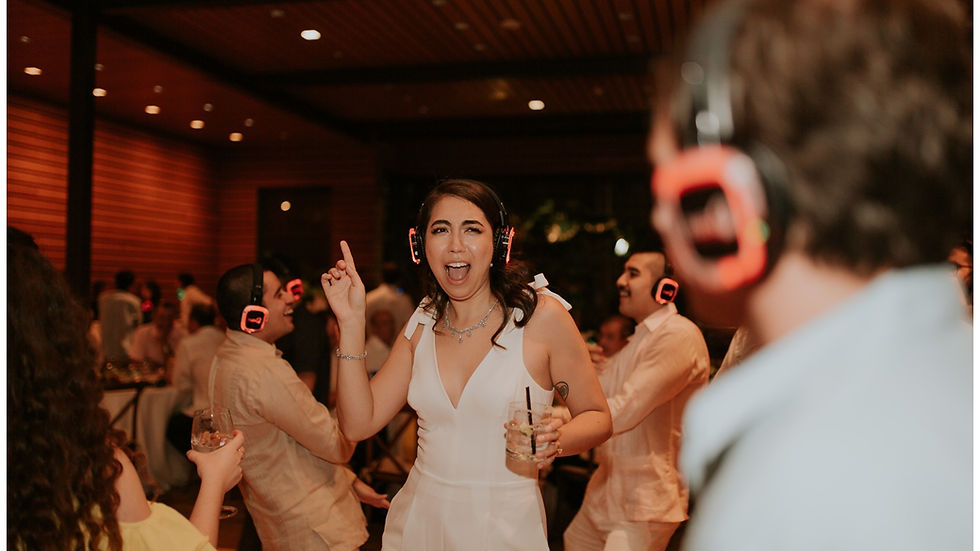
Silent Disco: The Multi-Generation Secret Weapon
Here's a creative solution to the multi-generational music challenge that most couples never consider: silent disco technology gives different age groups simultaneous control over their music experience.
With our silent disco setup, guests wear wireless headphones with multiple channel options. Channel one might play current hits and hip-hop. Channel two offers classic rock and throwbacks. Channel three features Motown and standards. Everyone's dancing together, but each person controls what they hear.
After coordinating 500+ silent disco events, we've seen how this solves the age-gap music problem elegantly. Your grandmother can dance to Frank Sinatra while your college friends hear Drake—and they're all on the same dance floor, sharing the experience despite different musical preferences. This works particularly well for weddings with extreme age ranges or strong generational divides.
Consider silent disco as your cocktail hour entertainment, as a late-night option after traditional dancing, or even as your primary reception entertainment if your crowd is particularly diverse musically. We handle all setup, provide the headphones, and manage the music channels so it runs seamlessly.
Music Selection by Generation: What Actually Works
Understanding what resonates with different age groups helps create strategic music choices throughout your reception. Here's what we've learned works across 6,000+ weddings.
For your oldest guests (70s and beyond): Classic standards from artists like Frank Sinatra, Dean Martin, and Nat King Cole. Early rock and roll from Elvis Presley, Chuck Berry, and Little Richard. Big band swing that they actually danced to in their youth. These songs aren't background music for this generation—they're nostalgic and meaningful.
For baby boomers and older Gen X (50s-60s): Motown hits from The Supremes, The Temptations, and Marvin Gaye. Classic rock from The Beatles, The Rolling Stones, and Fleetwood Mac. Disco and funk from Earth, Wind & Fire, Donna Summer, and KC and the Sunshine Band. These guests remember these songs from their own weddings and celebrations.
For younger Gen X and millennials (30s-40s): 80s and 90s throwbacks from Madonna, Michael Jackson, Prince, and Whitney Houston. Early 2000s hits from Beyoncé, OutKast, and Usher. Alternative rock from Nirvana, Red Hot Chili Peppers, and The Killers. These are the songs this generation requests specifically—they're having their own nostalgia moment.
For millennials and Gen Z (20s-early 30s): Current chart-toppers and recent hits from Taylor Swift, Drake, Bad Bunny, and Dua Lipa. 2000s and 2010s throwbacks that defined their high school and college years. Viral songs they know from TikTok or social media. Dance-pop and EDM that creates high-energy moments.
The strategy isn't playing every era equally throughout the night—it's starting inclusive and then adapting. Early reception focuses on cross-generational bridge songs and family-friendly selections. As older guests depart, we shift toward the couple's preferences and their peers' requests.
Our experienced wedding DJs carry extensive music libraries spanning all these eras and know how to blend them strategically rather than creating jarring transitions between completely different styles.
Cultural Considerations Across Different Markets
Music preferences don't just vary by age—they also reflect cultural backgrounds and regional influences. After performing thousands of weddings across California, Nashville, and destination locations, we've developed deep expertise in adapting to different cultural contexts.
Los Angeles and Orange County weddings often incorporate Latin music influences—from reggaeton and banda to cumbia and bachata. Many couples want seamless integration of both English and Spanish language tracks throughout their reception, not segregated into separate moments. We handle this cultural blending naturally, creating dance floors where both musical traditions coexist and complement each other.
San Diego and Desert Cities celebrations frequently include Mexican and Latin American cultural elements. These aren't just token additions—they're central to many couples' identities and family traditions. Our DJs understand how to honor these cultural preferences while maintaining the multi-generational balance that keeps everyone engaged.
Nashville weddings bring their own flavor, with country music elements appearing more frequently than in our California markets. But even in Nashville, we're balancing traditional country with contemporary hits and classic rock, creating a blend that reflects the city's musical diversity while respecting the couple's specific preferences.
What matters most is authenticity. We don't treat cultural music as a checkbox to complete—we work with couples to understand what these musical traditions mean to their families and how to incorporate them meaningfully. This might mean Spanish language music throughout the entire reception, not just one hora loca. Country music woven naturally into the flow, not isolated to a specific set.
After 6,000+ weddings, we've learned that the best multi-generational, multicultural receptions happen when we respect both age demographics and cultural backgrounds simultaneously. The music becomes a bridge between different family traditions and generations, creating moments of connection that transcend language and age differences. For more wedding planning inspiration across different cultures, explore The Knot's cultural wedding guides.

Common Multi-Generational Music Mistakes
We've seen these mistakes repeated enough times to know they're worth addressing directly, because they consistently create problems at multi-generational weddings.
Playing explicit content too early: Your college friends might love that song with explicit lyrics, but playing it while grandparents are on the floor creates awkwardness. Save these requests for later in the night after the demographic has shifted. Timing matters more than the song choice itself.
Ignoring the room to stick to a preset playlist: We've seen couples create rigid playlists that don't account for how their actual reception unfolds. If older guests are still dancing at 11 PM, we adapt. If the crowd shifts early, we adjust. Reading the room always beats following a predetermined plan.
Over-rotating between eras too quickly: Jumping from Frank Sinatra to Cardi B to The Beatles to Drake creates whiplash. Even when mixing generations, transitions should feel natural. Bridge songs help smooth these transitions rather than creating jarring shifts.
Assuming all older guests want slow, quiet music: This stereotype kills many receptions. Plenty of guests in their 60s and 70s want to dance to upbeat music and have great energy. Don't condescend to older guests by only playing sedate tracks—they'll tell you when they're ready to leave.
Forgetting about parents' generation entirely: Couples often focus on pleasing grandparents and their own peers, completely overlooking their parents' generation. Baby boomers and Gen X guests are often your most enthusiastic dancers if you play music from their era.
Making it homework for guests: Sending surveys asking guests to submit song requests creates decision fatigue and unrealistic expectations. You can't play 200 different requested songs. Better to trust experienced DJs who know what works and can read your specific crowd.
After handling wedding entertainment for 6,000+ celebrations, we've developed instincts that prevent these common pitfalls. Our DJs know how to balance generational preferences without creating awkward moments or energy drops.
How We Handle Conflicting Music Requests
Here's the reality: you'll have conflicting opinions about music. Your mother wants classic standards. Your friends want current hip-hop. Your partner's family has specific cultural music expectations. How do you navigate these competing preferences?
First, we prioritize your vision as a couple. This is your wedding, and ultimately the music should reflect what you want to hear. That doesn't mean ignoring everyone else—it means establishing your preferences as the foundation and then working outward from there.
Second, we use the natural flow of the reception to accommodate different preferences strategically. Family-friendly and universally appealing music early on honors older guests' presence. As the demographic shifts, the music shifts to reflect who's actually still celebrating. This approach satisfies multiple groups without anyone feeling completely ignored.
Third, we rely on bridge songs to unite competing preferences. When we're transitioning between different musical styles or generations, these universal crowd-pleasers smooth the shift and keep everyone engaged during the change.
What we don't do: try to please everyone equally at every moment. That approach creates bland, forgettable receptions where nobody's truly happy. Instead, we create strategic moments for different groups throughout the night, building toward the celebration you envisioned while respecting the multi-generational nature of weddings.
We've navigated these dynamics thousands of times across Los Angeles, Orange County, Santa Barbara, San Diego, Nashville, and destination locations. Every wedding brings unique family dynamics and musical preferences, but the strategic approach remains consistent: respect everyone, prioritize the couple, read the room, and adapt accordingly.
FAQ: Multi-Generational Wedding Music Questions
How do I keep both grandparents and college friends happy with music?
Start with family-friendly bridge songs that everyone enjoys—tracks like "September," "Uptown Funk," and "Don't Stop Believin'" work across all ages because they transcend generational boundaries and create authentic dance floor moments. After 6,000+ weddings across California and beyond, we've learned that the most successful approach respects everyone's presence early in the celebration while allowing natural transitions as older guests leave throughout the night. As the demographic shifts between 9 PM and 10 PM, you can transition to music that reflects your preferences and your peers' tastes without compromising the celebration you want. This strategic timing beats trying to please every generation equally at every moment, which typically results in bland receptions where nobody's truly satisfied.
What are the best songs that appeal to all age groups?
Classic crowd-pleasers consistently work across generations at weddings from Los Angeles to San Francisco to Nashville. "September" by Earth, Wind & Fire gets grandparents and grandchildren dancing together, "I Wanna Dance with Somebody" by Whitney Houston appeals to anyone who lived through the '80s or loves pop music, "Twist and Shout" by The Beatles bridges the generation gap effortlessly, "Don't Stop Believin'" by Journey creates singalong moments across all ages, and "Uptown Funk" by Mark Ronson brings modern production to retro funk in ways that work universally. These songs transcend generational boundaries and create moments where your grandmother dances alongside your college roommate, which is exactly what makes weddings special. After thousands of multi-generational celebrations, we've identified about 50-60 songs that consistently deliver this cross-generational appeal regardless of your crowd's specific demographics.
Should I create different playlists for different ages?
No, creating separate playlists for different age groups creates unnecessary segmentation and makes your reception feel choppy rather than cohesive. Instead, work with experienced DJs who understand how to blend eras naturally throughout your reception—transitioning from classic rock to Motown to '80s hits to current tracks in ways that feel organic rather than forced. The music should flow like a well-curated radio station, not feel like distinct blocks of "old people music" and "young people music" that signal to guests when they're supposed to be paying attention. Strategic mixing by professionals who've worked thousands of multi-generational weddings creates better energy and more natural dance floor participation than rigid age-based separation ever could.
When should I transition from family-friendly to more current music?
Watch your crowd, not the clock—this is the single most important rule for multi-generational wedding music. Typically, the natural transition happens between 9 PM and 10 PM as older guests begin leaving after participating in key moments like parent dances, cake cutting, and anniversary dance. However, every wedding is different—some grandparents stay energized until midnight dancing to everything you play, others leave after dinner service concludes around 8:30 PM. Professional DJs read the room constantly and adjust timing accordingly rather than following a preset schedule, paying attention to who's still present, who's engaging with the dance floor, and when the demographic has shifted enough to open up music selection to more current or explicit content. After 6,000+ weddings, we've developed strong instincts for recognizing these transition moments.
How do I handle explicit song requests with older guests present?
Save explicit content for later in the night after the demographic has shifted and older guests have naturally departed—timing is everything with potentially controversial music choices. Your college friends' favorite Drake song with explicit lyrics works perfectly at 11 PM after grandparents have left, but it's inappropriate at 8 PM during dinner when three generations are present. Most professional DJs maintain clean versions of popular songs for early evening and save unedited versions for late-night celebration when your peer group dominates the dance floor. This approach respects your family's presence without denying you and your friends the music you actually want to hear. The key is strategic timing rather than blanket censorship—everyone gets their moment without compromising anyone else's comfort.
Do I need to play slow songs for older guests?
Don't assume all older guests want slow, sedate music—this is one of the most common misconceptions couples make when planning multi-generational weddings. Many guests in their 60s and 70s have incredible energy and want upbeat, danceable tracks from their era like Motown hits, classic rock anthems, and disco favorites that get them moving. Include some recognizable classics they'll respond to, but don't condescend by only playing quiet background music or assuming they need constant slow songs to participate. After thousands of weddings across diverse demographics, we've seen 70-year-old guests outlast 25-year-olds on the dance floor when the music selection respects their energy level rather than their age. Let them tell you when they're ready to leave rather than playing music that encourages early departure.
What if my parents and my friends have completely different music tastes?
This scenario is completely normal and manageable with proper planning and experienced DJs who understand multi-generational dynamics. Honor your parents' preferences during dinner and early dancing with some classic rock, Motown, soul, or their era's defining hits—this shows respect and gets them engaged from the start. As the night progresses between 9 PM and 10 PM and demographics naturally shift with older guests departing, transition to music you and your friends prefer, including current hits and tracks that might not resonate with your parents' generation. Both groups get their moment without compromising the overall flow, and nobody feels like their preferences were ignored or that the music never reflected their tastes. This balanced approach creates celebrations where everyone feels included during their time at your wedding.
Should I incorporate live musicians for multi-generational appeal?
Live musicians elevate the wedding experience for all age groups in ways that pure DJ setups can't replicate. Older guests often appreciate live musicianship because it evokes the big band era, jazz clubs, and live performance culture they grew up with, while younger guests respond to the energy, authenticity, and Instagram-worthy presence of live performance. Combining a DJ with live musicians—like a saxophonist during cocktail hour and peak dance sets, or a percussionist adding live energy to DJ mixes—creates depth that appeals broadly across generations. This isn't just speakers playing music, it's an enhanced sensory experience with real instruments and live talent. After working thousands of weddings from LA to San Diego to San Francisco, we've seen DJ plus live musician combinations consistently generate more enthusiastic response from diverse age groups than DJ-only or band-only setups.
How does silent disco work for different age groups?
Silent disco offers multiple music channels through wireless headphones, letting different age groups hear their preferred music simultaneously while dancing together on the same dance floor—it's a fascinating solution for venues with noise restrictions or couples concerned about pleasing everyone. Channel one might play current hits and Top 40, channel two offers classic rock and '80s favorites, channel three features Motown standards and oldies. Everyone's physically together creating unified celebration energy, but each person controls their own music experience by switching between channels. We've executed hundreds of silent disco weddings across California, and the technology works particularly well when you have extremely diverse age groups or strong generational divides in music preferences. The visual of grandparents and grandchildren dancing together while hearing different songs creates memorable moments that traditional single-source music can't deliver.
What's the biggest mistake couples make with multi-generational music planning?
Trying to please everyone equally at every single moment creates bland, forgettable receptions where nobody's truly satisfied—this is the most common and most damaging mistake we see couples make. After 6,000+ weddings, we've learned that the better approach involves starting inclusive with family-friendly music that respects all generations present, then naturally transitioning as your crowd evolves throughout the night and older guests depart after key moments. Strategic timing beats attempting to play something for literally everyone all night long, which typically results in safe, middle-of-the-road music selection that generates lukewarm response from all age groups rather than genuine enthusiasm from anyone. Your wedding should feel like your celebration, not a compromise that satisfies the lowest common denominator—honor family early, then transition to what you and your friends actually want.
Can you mix cultural music with different age preferences?
Absolutely—we do this constantly at Los Angeles, Orange County, and San Diego weddings where Latin music, Bhangra, Greek traditions, or other cultural elements blend with English language tracks across different eras and age groups. The key is seamless integration rather than segregation, avoiding the trap of creating distinct "cultural music hour" and "American music hour" blocks that feel disconnected. Cumbia and reggaeton work alongside Motown classics and current hits when mixed thoughtfully by experienced DJs who understand both cultural authenticity and cross-generational appeal. Salsa transitions naturally into Bruno Mars, Greek folk dancing flows into contemporary pop, and Bollywood beats blend with hip-hop in ways that keep all generations engaged. Cultural integration while managing age diversity requires experienced professionals who've worked diverse weddings—this isn't something most DJs can improvise successfully without significant multicultural experience.
How much input should I give my DJ about age-appropriate music?
Share your general preferences, must-play songs, and absolute do-not-play tracks, but trust experienced DJs to read the room and adjust in real-time based on crowd response rather than over-directing with rigid playlists. After 6,000+ weddings, we've developed strong instincts for multi-generational crowds—we know when to hold back explicit content, when to lean into classics for older guests, when the demographic has shifted enough to open up music selection, and how to transition between generations seamlessly. Over-directing with hour-by-hour playlists or demanding specific songs at specific times often creates worse results than letting professionals adapt to your specific reception's energy, timing, and actual guest behavior. Provide the framework and trust, then let experienced DJs execute the details based on what's actually happening on your dance floor rather than what you predicted would happen months earlier during planning.
Final Thoughts
Wedding music for different ages isn't about finding one magical playlist—it's about understanding how your reception naturally flows and using that evolution strategically. Start inclusive, honor your multi-generational guest list, then transition to the celebration you envisioned as the night progresses.
After 6,000+ weddings across Los Angeles, Orange County, Santa Barbara, San Diego, the Desert Cities, Nashville, and destination locations, we've mastered the art of keeping three generations on the dance floor together. From DJ services to DJ and live music combinations to silent disco options, we have the experience and expertise to make your multi-generational wedding celebration exactly what you envision.
Every wedding is different, and that's exactly why reading the room matters more than following rigid formulas. Contact us and let's create a music strategy that honors your guests while delivering the celebration you actually want.


Comments